
Insights from ALIS 2026: Groundhog Day, New Distribution Channel, How AI Mega Projects Affect Hotel Occupancy, How to Get a New Project Done, and 9 Things to Expect in 2026
By: Charles E.Oswald
A soft finish to 2025, optimism for 2026, AI, immigration,and trade policy were among the hot topics discussed at the Americas Lodging Investment Symposium (ALIS). If you own a hotel today, there is plenty of cause for tempered optimism. If you have capital teed up to develop or acquire a hotel, then you might be licking your chops in preparation for what comes next.
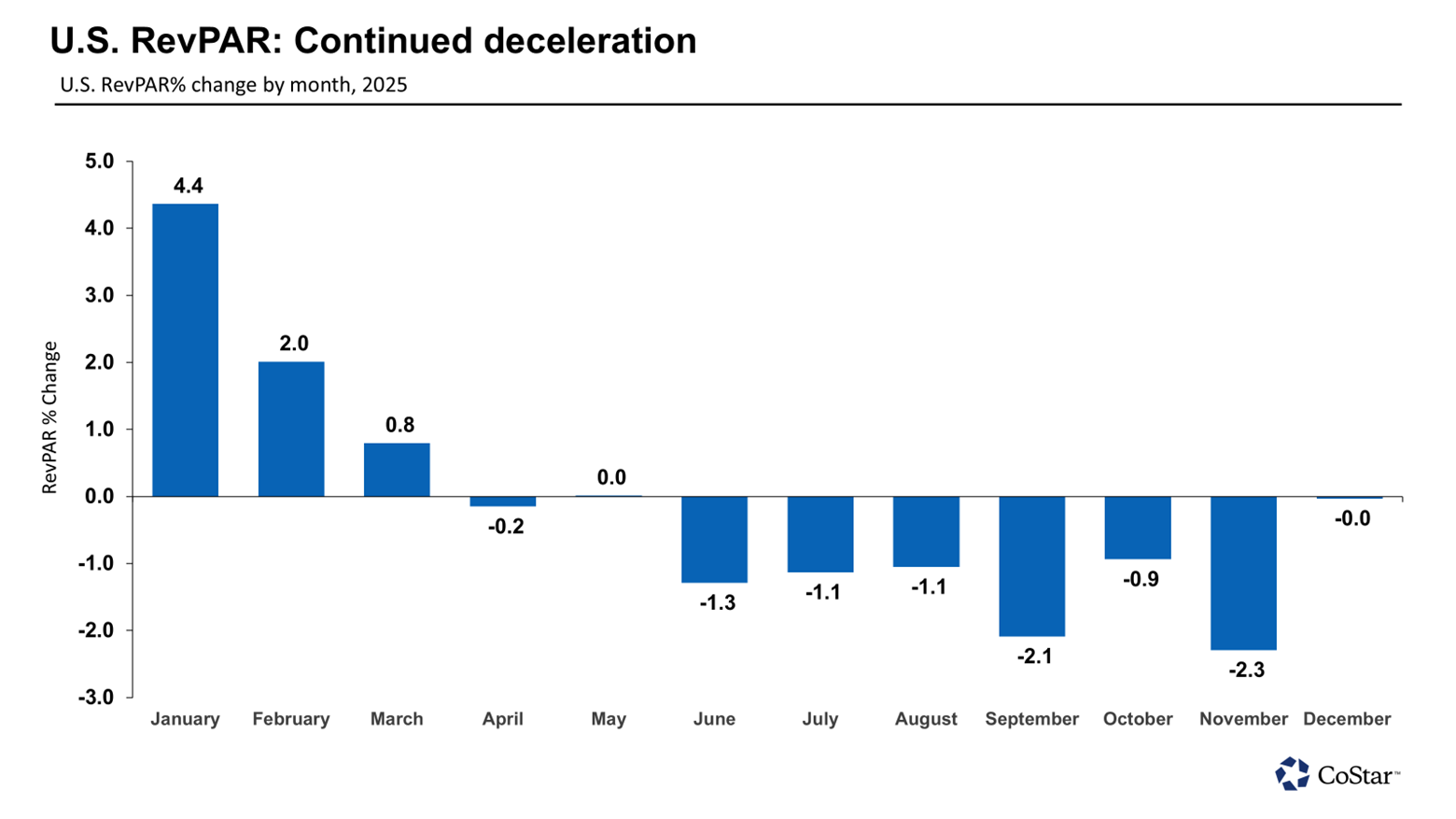
1. Groundhog Day for hoteliers. Okay, I can’t take credit for the Groundhog Day reference. That was coined by my good friend @Jan Frietag at @CoStar. Driven by hurricane markets, Q4 2025 was the third consecutive quarter of lodging industry topline RevPAR decline. Likewise, Group segment production fell for the third consecutive quarter. This hasn’t occurred since the Great Financial Crisis, aside from the pandemic. And hotel demand has fallen for seven of the last eight quarters.
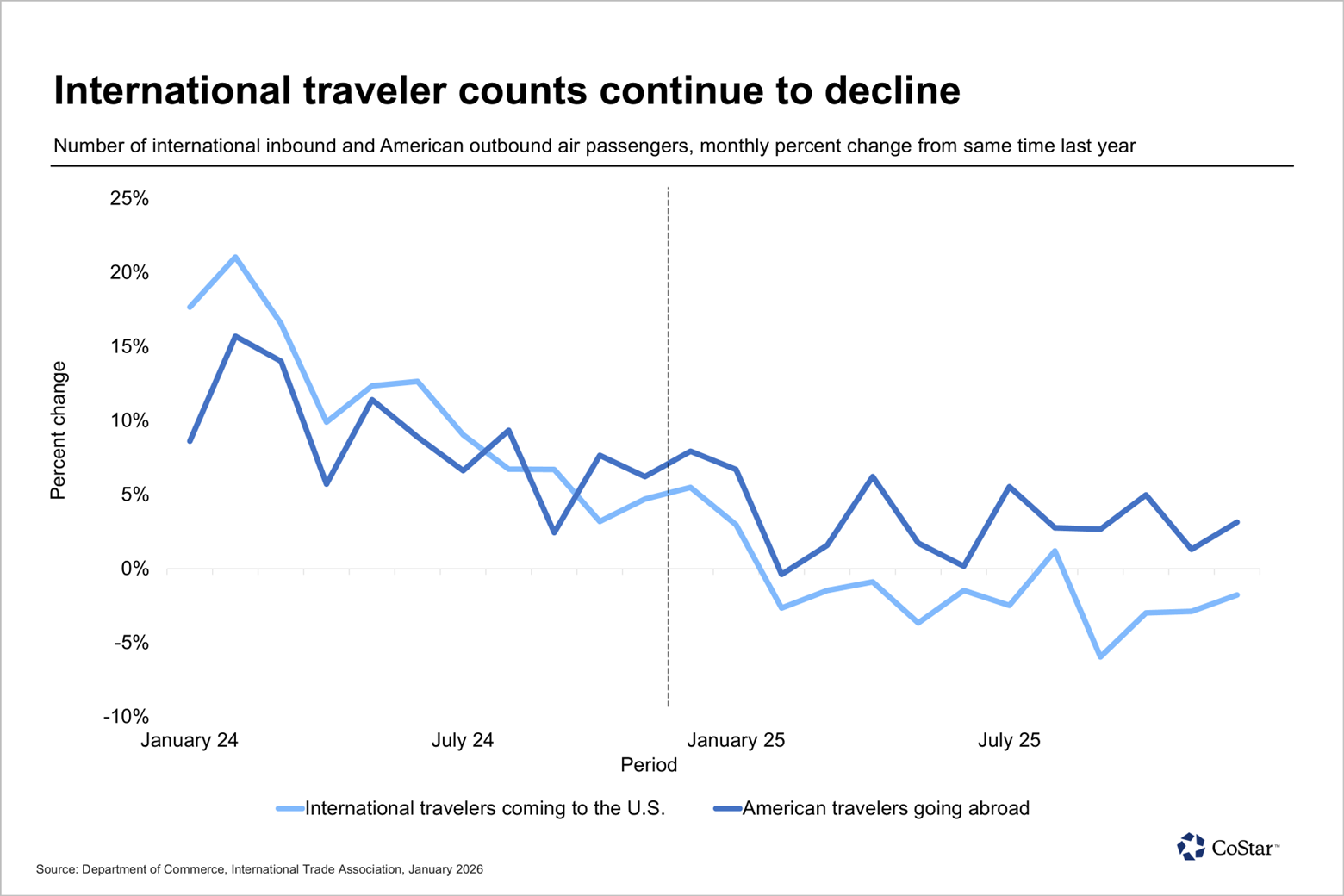
2. Inbound US arrivals declined in 2025while outbound travel continues to rise. Ongoing geopolitical tensions may extend international travel trends. However, FIFA World Cup should soon break the trend.
3. Nine reasons why 2026 might be better.The declining RevPAR cycle could be broken in 2026 because:
· FIFA World Cup
· A favorable holiday calendar
· USA 250th anniversary events
· DOGE cuts overlap
· Tariffs are now baked in and understood
· Higher projected tax refunds will put discretionary cash in the hands of consumers
· Group booking pace is slightly up
· AI infrastructure projects
· Hopefully, we can avoid another government shutdown.
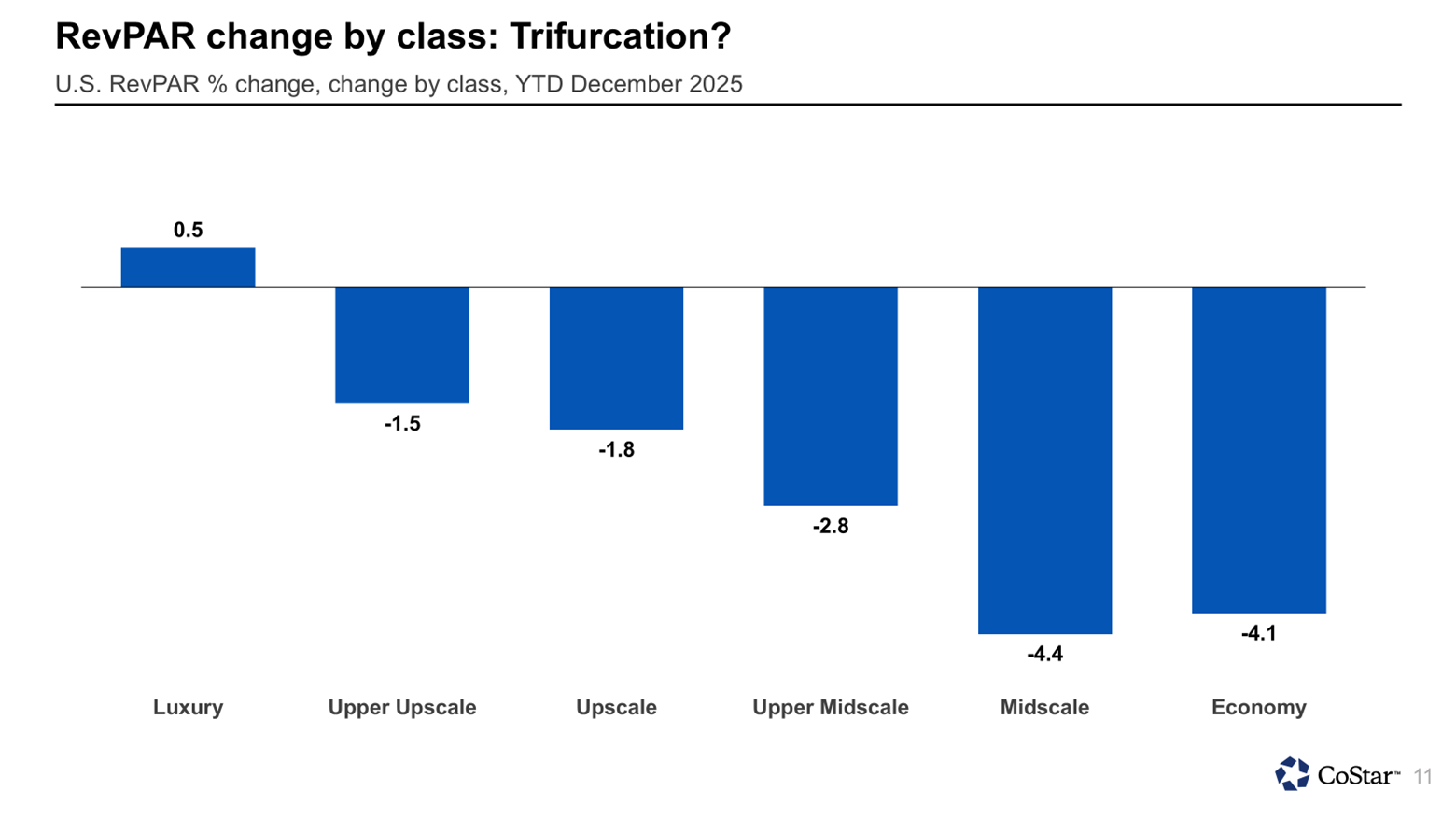
Meanwhile, we’re seeing the rise of white-collar layoffs with the advent of AI. If this all happens, might we seethe performance gap between the luxury segment and everyone else close?
4. Why is occupancy down while total accommodation demand is up? Total accommodation demand was up 4.4 million rooms for 2025,yet hotel demand was down over 6 million rooms. How can this be? It’s because short-term rental demand (i.e., Airbnb) is up 11M, accounting for net positive growth in total accommodation demand. Perhaps this is why the major hotel parent companies are leaning into extended-stay, branded long-term accommodation (BLTA) models, branded apartments, and other forms of branded residential. If you can’t beat ‘em, join ‘em.
5. Can Airbnb’s distribution solution compete with OTAs and shift demand back to hotels? Airbnb has quietly launched a hotel search option in New York and San Francisco, and it’s coming to Miami soon. The plan is to expand the program nationwide. This means that Airbnb’s short-term rental customer base can now see hotel options. The present focus is on independent hotels, but it may be of mutual interest for the major hotel chains and Airbnb to settle their beef if Airbnb can reduce booking costs relative to Booking and Expedia while shifting some short-term rental demand back to hotels.
6. Oracle and TikTok. Oracle has secured a deal to take a major stake in TikTok. Imagine the potential that this marriage could bring when it comes to demand signals, customer intent, traveler insights, guest interaction, and anticipatory intelligence. Will Oracle ever develop a booking engine to better control the booking journey while improving distribution efficiency and costs?
7. To book or not to book - ICE & the National Guard. The Lodging Industry Investment Council explored the legal,economic, and moral question of whether to book these and other federal or federalized enforcement at hotels. The consensus was that hotels are here to provide safe and welcoming accommodation to all, although there were several strong dissenting voices.
ALIS 2026 made one thing clear: the lodging industry is navigating a period of real complexity, but not without meaningful opportunity. Shifts in distribution, the acceleration of AI, and evolving travel patterns are reshaping demand. For owners and operators who stay clear-eyed, disciplined, and open to new models, 2026 may not just mark a rebound, but a reset. Stay tuned for part two of my ALIS recap, "How to Win in the Next Growth Cycle."

