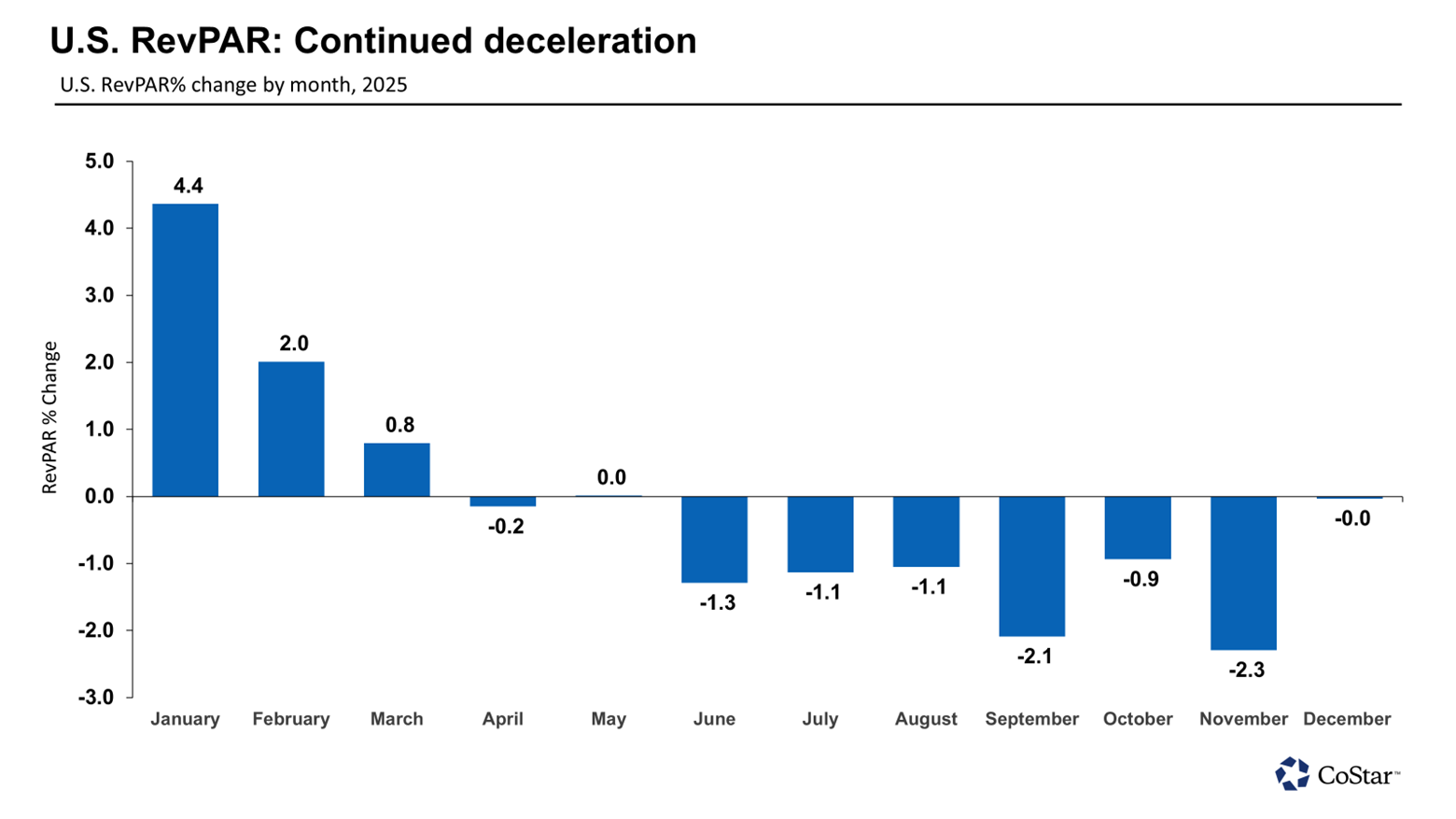
In the first installment, I described the current state of the hotel industry based on observations and discussions at the recent ALIS conference. Here, I’ll share what we believe are the key components for winning in the next growth cycle.
Buy the dip. It has been a tough 3 years for commercial real estate. Don’t sell, unless you must. And some owners “must” in the face of debt maturity and overdue PIPs. Transactions under pressure and a declining cost of capital will enable forward-looking investors to realize outsized investment returns in historically low-supply growth conditions.
“Skate where the puck is going” – Wayne Gretzky.
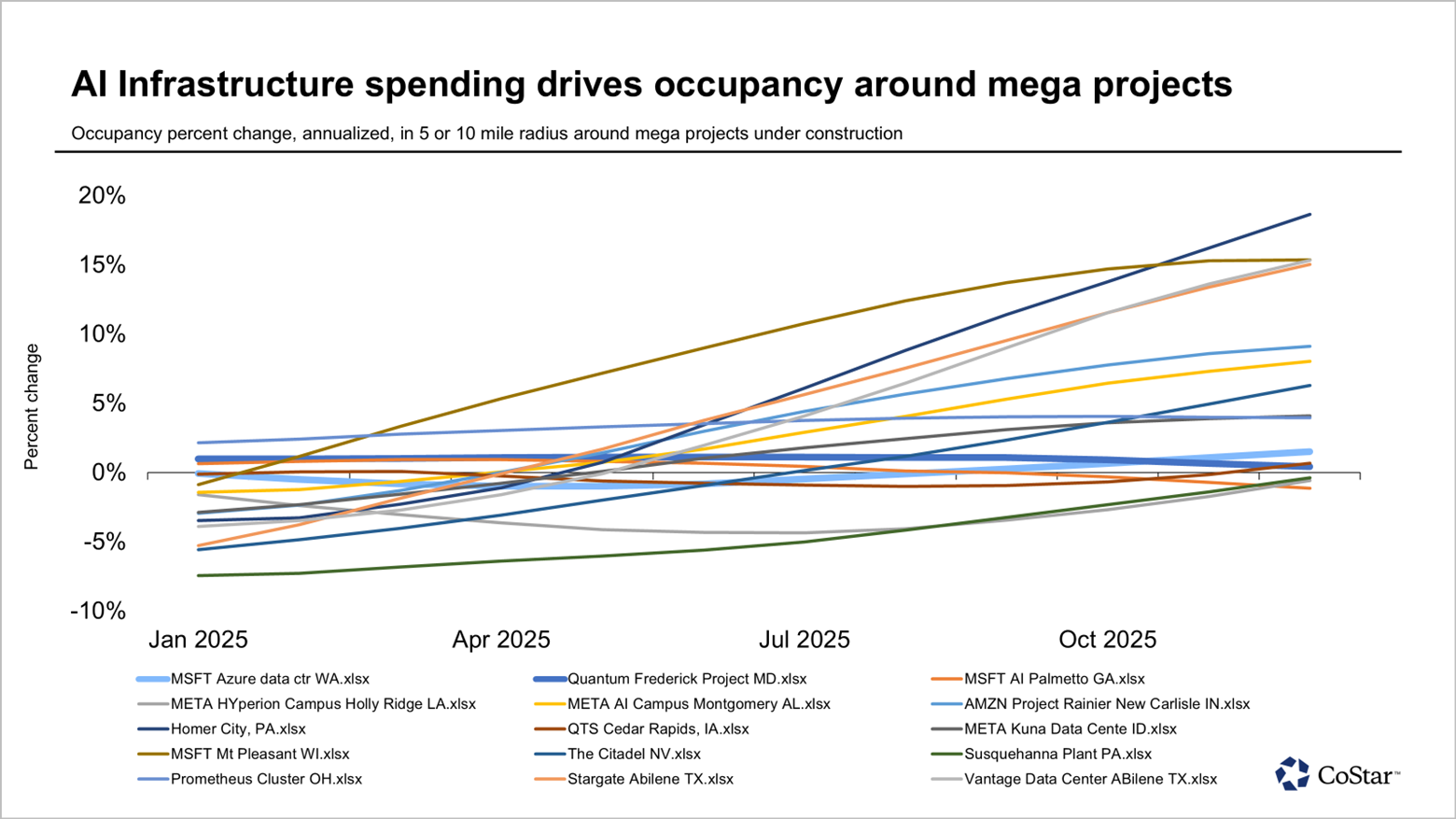
Don’t underestimate technology disruption. AI stocks have soared, and AI investment is driving the economy. Consider this: 2025 CapEx spending on AI was greater than the spending on NASA, the US Department of Energy, and the US Department of State COMBINED. The AI industry’s spending on chips, data centers, and power is unprecedented, unfathomable, and potentially unsustainable. The BEA reported a net 0% growth in US CapEx spending outside AI. In other words, 100% of year-over-year spending growth is associated with AI. Hotel investors and developers should be buying and building where the AI investment (i.e., the“puck”) is going.
This chart highlights how the build-out of AI infrastructure is affecting hotel performance:
Public-private partnerships and tax credits can reduce capital outlays, lower development costs, and improve internal rate of return (IRR).
New hotels have a significant competitive advantage in market conditions where owners have had difficulty funding property improvements. However, new developments are very difficult to finance at today’s high cost of construction and current interest rates.
Savvy developers are overcoming today’s high costs by leveraging tax credits and public contributions to reduce at-risk capital outlays. In some cases, municipalities are contributing land or favorable ground leases to redevelop an important site or retrofit a historic government building. In other cases, they are contributing capital towards the development of conference centers, marinas, parking garages, entertainment venues, or other infrastructure. Tax Increment Financing (TIF), Public Improvement Districts (PID), Opportunity Zones(OZ), Historic Tax Credits (HTC), and New Markets Tax Credits (NMTC) are among the programs Aperture Hotels has worked on in the past or is working on with developers today.
Leverage technology to find new guests and customize their experience. The AI revolution has brought many new productivity advantages.Among the most practical use-cases is how hotel operators can use new top line technology to shop your competitor’s rates for top-performing market accounts,deliver decision-maker contact information for those accounts, and then neatly sort all that information into a low-cost, integrated CRM. Tech solutions like this enable strategic revenue management and significantly improve our sales teams' productivity. It really is game-changing for hotel sales teams.
There are also new technology solutions that enable booking local experiences, customizing F&B orders, and offering travel insurance within the hotel reservation process. By incorporating these experiences into the booking path, hotels can earn commissions on each incremental revenue stream booked, thereby improving EBITDA margins that would otherwise erode.
Travel insurance is particularly interesting. This is a $4B domestic US market, and 20% of travelers report purchasing trip protection when it’s available. Expedia, Booking.com, and many independent hotels already offer trip protection. To remain competitive, the major brand booking engines will need to catch up with independent booking engines by enabling travel insurance with a pass-through revenue share for hotel owners.
Driving ancillary revenue to win the fight against EBITDA erosion. Speaking of improving eroding EBITDA margins, the industry’s leading operators gathered for the annual AHLA management committee meeting to discuss rising labor costs. The consensus was clear: there’s not a whole lot more we can do to cut operating costs without harming guest experience, so the conversation turned toward a discussion of how we can drive high-margin ancillary revenue.
At Aperture Hotels, we’ve implemented a variety of revenue streams to do just that:
· Offering travel insurance with commissions payable to the property
· Monetizing unused Wi-Fi bandwidth through mobile data carriers
· Pre-arrival emails to sell room upgrades and book experiences
· Equipment rental (i.e., ski, bikes, etc.)
· Monetizing unutilized parking
· Identifying retail lease opportunities
· Partnering with third-party outfitters with commissions payable to the hotel
· Adding labor-less revenue opportunities through robots and automation for barista, bartender, scan-n-go market automation, etc.
Meanwhile, Consumer Price Index (CPI) growth continues to outpace ADR growth. The pressure on EBITDA margins is real.
Beat the odds with the right management company. Over a three-year period, Aperture Hotels averaged over 10% RevPAR Index growth through our first full year of operation after taking over management from other hotel management companies. Let us tell you more about our story and how top-performing management companies play offense to overcome market pressures!